Monday, October 8, 2007

Bed Prep and Garlic Planting

Broke out the shovels today for some bed prepping. Oh, the satisfaction of looking at a newly turned bed, all rich and brown and full of soil amendments and composted chicken manure. And waking up sore, that's a good one, too.

I didn't post anything back when we harvested the garlic in July, so I'm throwing in some shots now, since I didn't take any of the planting process (stem end down, yo). I really like the look of the rootlets attached to the heads.


Recently, I heard that a cut clove of garlic is a good bee string remedy (possibly because it's alkaline? I've also heard of baking soda and water being recommended by poison control centers). At KVG we had occasion to try a grated onion for the same reason, but we learned that you have to put it on right after the sting, not after the area's already swelled.

Sunday, October 7, 2007

Pickles from the Old School

No vinegar here, just a tried and true fermentation process. Thanks to Sandorkraut's book for the recipe. We lined the crock with flowering heads of dill, grape leaves (to keep the pickles crunchy), and lots of garlic before adding our cukes. For the real deal, we went with a 5.4% brine strength, which translates to about 3 T of sea salt to 1 quart of water. The result? Gorgeous (if I do say so myself) and deliciously sour pickles. It was amazing to be able to use ingredients completely grown at the farm--when's the next time I'll be able to just jog outside for grape leaves?


If you're into canning pickles in vinegar, consider a KVG twist and spice them up with mustard seeds and curry powder. And when you have a few extra pickles lying around, consider this experiment.

Saturday, October 6, 2007

Bagel Inspiro

Inspiration struck Lore and Marissa this weekend and they bagel'd for the better part of a rainy Sunday, the "Bakequinox". They mastered the genre as far as I'm concerned, and I think this is the recipe they used. It's the real deal--sans eggs and complete with boiling step, of course.


Bagels proofing by the woodstove (the picture that didn't come out too yellow came out too dark!):


On the menu were 7 kinds of bagel:

Everything Bagel (garlic, onion, sesame seeds, poppy seeds...)
Berry Bagel, my favorite, with blueberries, cranberries, and raisins
Carob Peanut Butter Bagel
Tomato Rosemary Everything Bagel
Cinnamon Raisin Bagel
Jalepeno Cheddar (with garlic) Bagel
and last but not least, the Cranberry Goatcheese Bagel.


Friday, October 5, 2007

Hung the Cabbage

Cabbage, my new favorite vegetable. And not just for kraut! We threw it in a minestrone the other day and it held its own beautifully. I'm just not quite ready to take on Charles Hardy--he holds the world record for consuming over 6.5 pounds of cabbage in only 9 minutes 1.


This book, by Mike and Nancy Bubel, takes you from designing and building your own root cellar to practical tips for preserving different kinds of fruits and vegetables (the list is loooong).


Justin hanging cabbage in the cold room (a tough job considering you have to step around boxes of apples and pears, over a tarp full of ripening tomatoes, and duck under bags of potatoes). Photo credit: John Madsen

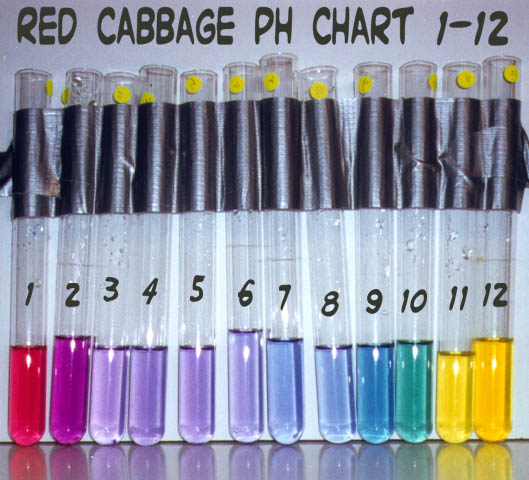
Another great thing about (red) cabbage is that you can use it to make your own pH indicator! As you can tell from this photo, you get some beautiful colors and a fairly distinct range. These sites will hook you up with a procedure for making your own and an explanation of how it works.

Thursday, October 4, 2007

Nixtama-Wha?!?

So how excited was I to learn how to make tortillas?

There are only two ingredients: corn masa harina and water. Corn masa is traditionally made by a process called nixtamalization, in which corn kernels are soaked and cooked in lime-water, de-hulled, and ground into a dough (or dried and ground into a flour, called masa). **Don't try it with plain cornmeal, all you'll get is a mess!** Corn treated in this manner is known in North America as hominy. Some, including Wikipedia, cite this process as the foundation for the civilizations of the Americas (North and South), since the combination with lime-water makes bio-available the niacin and essential amino acids that corn alone lacks, creating a complete protein. When Europeans took to using maize, they skipped the nixtamalization process, and the maize-dependent cultures on that continent consistently developed protein-deficiency diseases.

Sadly, the Maseca we're buying here in the U.S. doesn't even approximate the real masa. Read this article from Grist and add another notch to the "how messed up can the world's food economy get?" belt.

That said, these blow store-bought corn tortillas out of the lime water. We never quite figured out the ratio of masaharina to water--it kept changing! There was the 1 c masa to 11/8 c water on a label, but then we got 2.25 c masa to 1.5 c water, and another time 2 c masa to 11/8-11/3 c masa (which is close to the last ratio, right?). So we just went by feel. Once the water is thoroughly mixed in, the dough should be just wet enough to shape into balls. The real test is in the pressing. Place a dough ball between two ziploc bags to press into shape. Cracks will form around the outer edge, try to correct those before you keep enlarging the dough circle. The test is removing the circle--it's often a close call, but if it sticks completely to the ziploc, it's too wet. If the cracks are unmanageably large, the dough is too dry.

Hat's off to Andrea for bringing this process into our lives. And also for being so hardcore that she's going to try using woodash to make her own masa from corn she grows.

Wednesday, October 3, 2007

Grapes!

We harvested the grapes! Buckets and buckets of them! And then juiced them in a steamer. Actually, that last sentence is too short to do the process justice--it took three days and yielded about 90 quarts if memory serves. The juice is an amazing color that my camera just didn't capture--bright pink! It looks like KoolAid. And the flavor is so sweet, you can hardly believe someone didn't sneak extra sugar into it.

Click here for before and after shots of the vine

Sunday, September 30, 2007

It Must Be Friday...

Not just an excuse for John's Peanut Sauce (but a mighty good one)-- Spring Rolls!

Ingredient options are endless. Some that we've tried: apples, carrots, cucumber, lettuce, cilantro, tomatoes, tempeh, tofu, beans, and crushed nuts. Bean thread noodles were the only constant.

Wrapped in tapioca paper (see this site for methodology) and either dipped or soaked in peanuty goodness.


Saturday, September 29, 2007

7 page recipe, 1 fabulous cake


It's a raw carrot cake with macadamia nut frosting! A recipe that spans 2+ days in the making and yes, seven pages. Hats off to the recipe's creators, Andrea's former roommies, Thalia and Steve (whom I've never met but greatly respect for their taste in cakes).

The to-die-for frosting is made from macadamia nuts and pitted dates soaked in orange and lemon juice, blended with more orange juice and vanilla extract, with juice-soaked poppy seeds folded in. MMmmm!

Friday, September 28, 2007

More Fun with Tomatoes

The order of the day is slicing up tomatoes to put in the dehydrator. At KVG, dried tomatoes help the canned pasta sauce and salsas fill the winter lycopene void.


Though nothing beats a fresh tomato, dried tomatoes can add color and flavor to hummus, bagels, dressings, you name it. After the first 5-gallon bucket full, patterns emerge before your eyes...


But, we're not drying them all. For samosa night we found a great tomato chutney recipe online. I'm still on the lookout for a canning recipe (it seems like this one would be cannable without the addition of a lot of vinegar, since it's basically just tomatoes with some spices, but i'm not a confident enough canner yet to go ahead with that). Becks and Posh have a sweeter version for canning (okay, you got me, i didn't even read the recipe, but the photos were really nice), but I'd want to avoid white vinegar and sugar if possible. So the search is on, to be continued next tomato season.

Thursday, September 27, 2007

Breaking down the Garden

Today was a hard day. Not so much in a physical way, though we macheted and hauled most of the rows; it's just difficult to accept such drastic change. The weather's been slowly shifting, but looking at the garden we went from summer to autumn in under 7 hours (and autumn is so flat!).

Wednesday, September 26, 2007

Child of the Corn

Do you remember the first time you had sweet corn raw? I was at the Evanston farmer's market (one summer ago? two?) and one vendor was just sure that if you tried his corn raw you'd have to get some. I'd had cooked corn on the cob before, but more often corn from the can, so I was a bit hesitant...

I'll probably never forget that taste.


We've been cutting a lot of corn for freezing this past week on the farm. And we made these delicious corn-cilantro panackes. Pancakes, patties, I don't know what to call them. But they are good.


Corn's ready when the silk turns brown.


If you think you're safe because you're off in a non-midwestern city--think again!

Saturday, September 22, 2007

Basil E. Tomatoweiler

Summer's not over yet! There's still basil to be eaten! Shown here in the form of sunflower seed pesto. This lighter- tasting (and dare I say, healthier?) version is quick and simple to make, but it does require a Vitamix or food processor or perhaps an overachieving blender.

Sunflower Seed Pesto

1 part garlic
4 parts sunflower seeds (or walnuts!)
4-5 parts fresh basil leaves
water/oil as needed

The proportions are actually a big guess on my part, I'd just throw in some garlic, nuts, and basil, blend, and see where the consistency and taste are at. Serve as 1 part substrate: 3+ parts pesto. It also goes really great in tomato soup. Here again, I have no real numbers. Maybe one of the chefs will email me their take on it:

Kyli + Lore's Tomato Soup (as vaguely remembered by Jess)

Saute onions and garlic (lots!), then fill pot with coarsely chopped tomatoes (don't bother removing the the seeds, they'll get strained out later). Cover and let stew for a while, then add lots o' chopped basil. Let stew for a few more minutes, then carefully blend (it's hot!). To each part blended, add a bit of olive oil (we ended up using about 1/8-1/4 of a quart jar). From the blender, strain soup into a pot, heat up again, and serve. If it's too liquidy, let simmer to reduce.

Saturday, September 15, 2007

Gad-Zukes!

I don't know which I like better: when vegetables resemble animals or when, wait, there's nothing I like better.

Stop looking at me, swan.

One good way to use up a stockpile of zukes is to make zucchini pizza. It's shown below flipped over on itself like a very thick omelette, but it works as a single layer as well. Sauce and top with whatever your usual pizza works are.

Another is Lorna Sass's zucchini bread. Fluffy, moist, vegan. Need I say more?

Wednesday, September 12, 2007

Onion harvest

Time to get the onions out before the rains come. The ones at Kings Valley Gardens are especially fierce, I think they even got Justin (the resident onion dicer) crying the other day. I happened to notice that the French Republican Calendar, possibly the most vegetable-friendly time tracking system ever created, has no day named for onions (or garlic for that matter!) Talk about setting up your revolution for hard times. At least these people know what's up.


This site tells you (in science babble) why we cry , this one tells you how to avoid it (try sticking the onion in a freezer for a few minutes before chopping).


And as usual for veggies without any particular recipe, I dug up some facts. Onions originated from the Middle East, and have been eaten, since, well, forever. Lots o' folks thought that they increased strength and courage: they were ordered up for the laborers who built the pyramids as well as the troops of Alexander the Great. Today, the average Libyan eats almost 67 pounds of onions each year (Americans? 21 pounds). The largest onion recorded weighed almost 11 pounds1. Onions have even been used to predict who you'll marry 2. Oh, and the Onion Goddess looks a lot like Lore.


Friday, September 7, 2007

Honey harvest


"Well," said Pooh, "what I like best -- " and then he had to stop and think. Because although Eating Honey was a very good thing to do, there was a moment just before you began to eat it which was better than when you were, but he didn't know what it was called --The Tao of Pooh

In our case the moment lasted for a number of hours--the honey harvest!!! The robbery began early in the day since bees become more active with warmer temperatures. What I remember most is the buzzing sensation on my hands--feeling their vibration through two layers of gloves! I mean, I'd be pretty angry, too.

Kyli and I with our spacesuits on


I think we've already raved about honey's healing properties in a mead post, so i dug out some other random related facts: About 1/2 of the human diet comes from plants that are pollinated by bees. Honey is the only food that does not spoil (they found edible honey in King Tut's tomb!). All the worker bees are female (male bees, called drones, don't collect pollen, and they either die soon after mating with the queen (their purpose) or get kicked out of the hive before winter). And can you guess where most of the world's honey comes from? China supplies almost half, with the US, Argentina, and Ukraine filling in most of the rest (1,2) . It's weird to think about industrial production of honey, especially since the animals themselves are so delicate.

Alright, that's all i've got. Photos of the extraction process here

Tuesday, August 14, 2007

Tomato Inspiro

Monday means tomato harvest here at Kings Valley Gardens. There's a 100 foot bed with 4 varieties, and even though Andrea staggered their ripening by planting some in the corn's shade, we always come away with over four 5-gallon buckets.


<--- better angle for the Gumby look-alike branch.


Also, since Colin's not around to dissuade me, I've decided that it's okay to post photos without specific recipes. Crazy, right? But I'll try (try) to keep the posts semi-useful. These stuffed tomatoes were Kyli's brainchildren, the inner ingredients stir fried and then poured into the tomatoes. I can't remember if she scooped out the tomato guts previous to stuffing them--seems like they must have been...(hmm, not so useful, jess). Recommendation: Make the innards a bit spicier and drier than you normally would, maybe adding a slightly-undercooked grain?, because when cooked the water from the tomato will seep in and dilute it, and if it can't hold it's own in the flavor department, everything will taste like tomato. Which hardly counts as a disappointment...